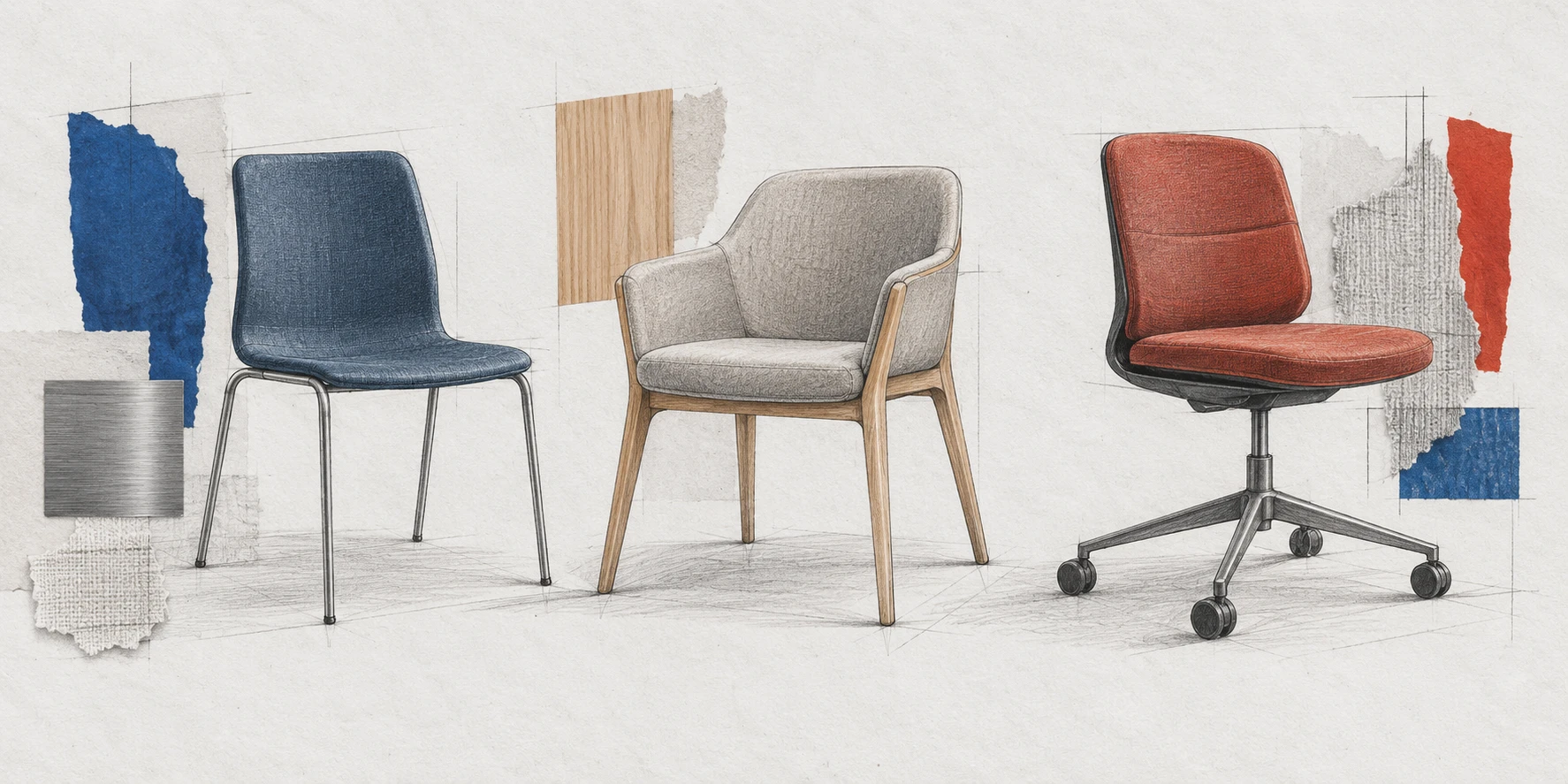
When specifying chairs, the shell usually gets the attention first. The base can feel like a finishing choice: metal, wood or something that rolls. Yet it plays a practical part in table clearance, floor protection, cleaning access and long-term durability. This guide looks at three complete chair configurations and the checks that matter before committing to a commercial order.
1. Start with how the space operates
It is easy to start a specification discussion by asking which material looks more premium or feels stronger. In hospitality and commercial interiors, a more useful starting point is what people will ask the chair to do every day:
- Guest movement: How do people pull the chair out, sit down and leave? Does it need to tuck fully under the table to keep an aisle clear?
- Cleaning and handling: Will staff lift chairs or slide them across the floor? Will the feet regularly encounter water or cleaning solutions during table resets and mopping?
- Floor transitions: Does the route cross tiles, a seamless poured floor, timber flooring or the edge of a carpet?
- Room use: A busy cafe, a private dining room and a shared space used for workshops have different priorities for movement and support.
Map these everyday movements before choosing a base material. They give you a clearer basis for selection than product photographs alone.
2. Metal legs: check the footprint beneath the table
Slim metal frames can give modern dining areas and compact public spaces a clean, light appearance. For a project specification, though, look beyond the profile of the tubing to the footprint the legs create at floor level:
- Table clearance: Splayed legs broaden the support footprint. If the feet extend well beyond the seat, they can catch on a table’s pedestal, base plate or the legs of a neighbouring chair.
- Access between seats: In a closely spaced row of armless chairs, the angle of the legs affects how easily guests can enter from the side.
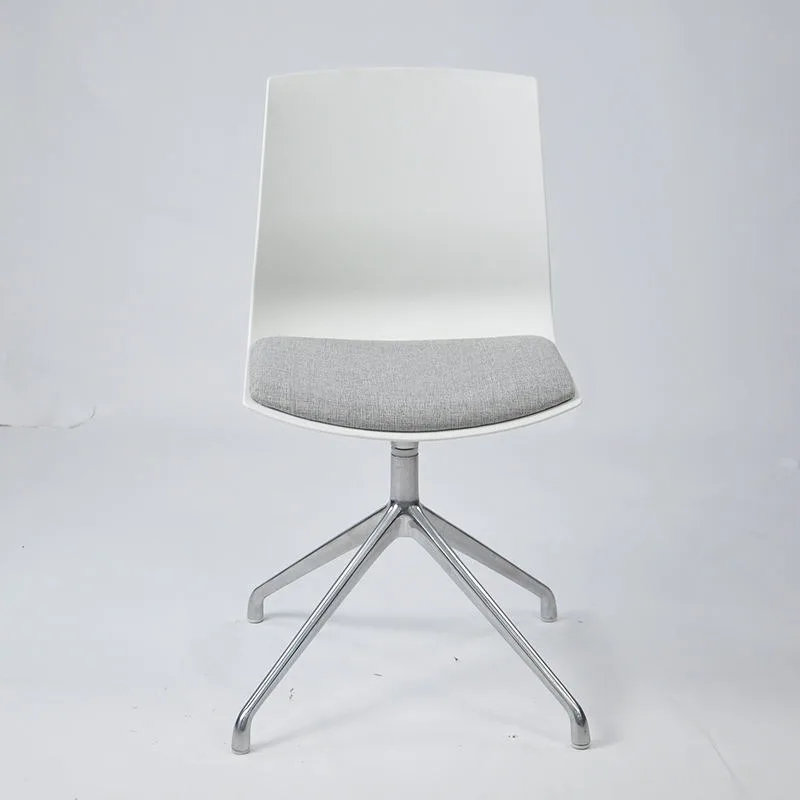
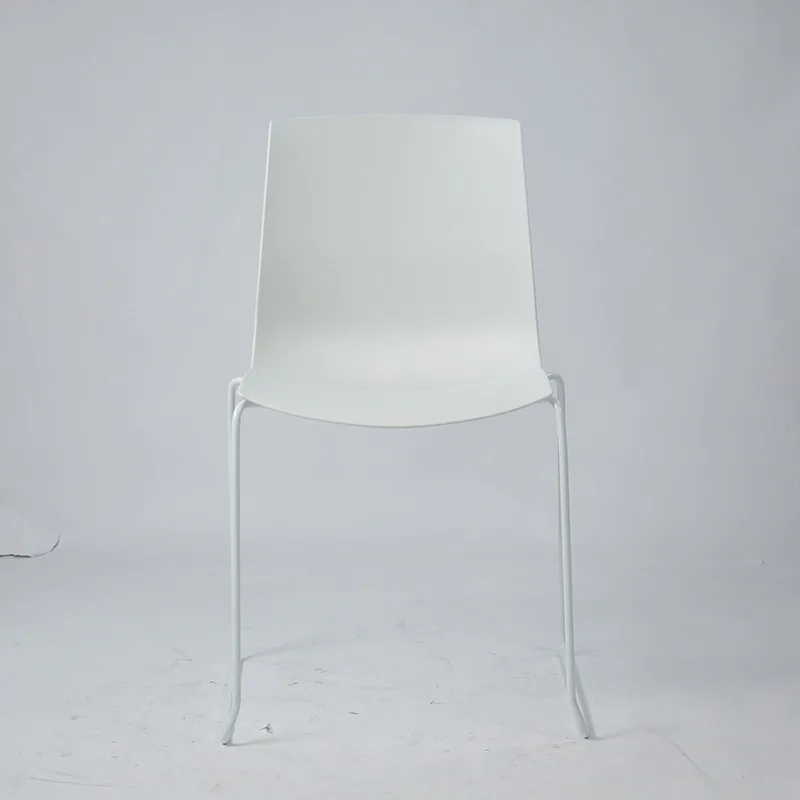
Our AH-8070-81 combines a one-piece polypropylene (PP) shell with a metal support frame and four tubular legs. Its open, armless profile makes it a useful option to assess at a shallow table or in a closely arranged seating plan. During a mock-up, place the sample beside the actual table and try pulling it out, sitting down and moving away while someone occupies the next seat.
For maintenance, ask about the finish’s resistance to wear, the service life of tube plugs and glides, and whether those parts can be replaced. A slender frame does not tell you whether a chair stacks. Nor does a metal base mean that strong acidic or alkaline cleaners are suitable. Confirm the care requirements for the exact configuration you are ordering.
3. Wood legs: balance warmth with care at floor level
Wood bases can bring warmth to dining rooms, guest rooms and reception areas. When specifying them, consider both their relationship with the surrounding materials and the cleaning routine:
- Colour and texture: The legs do not have to match the table or floor exactly. A contrast in tone or grain can give the chair a clearer presence in the room.
- Structural connections: Inspect how the wooden legs connect to the plastic shell or upholstered seat. Mounting plates and concealed fixings transfer loads between the seat and base, including forces from sideways movement.
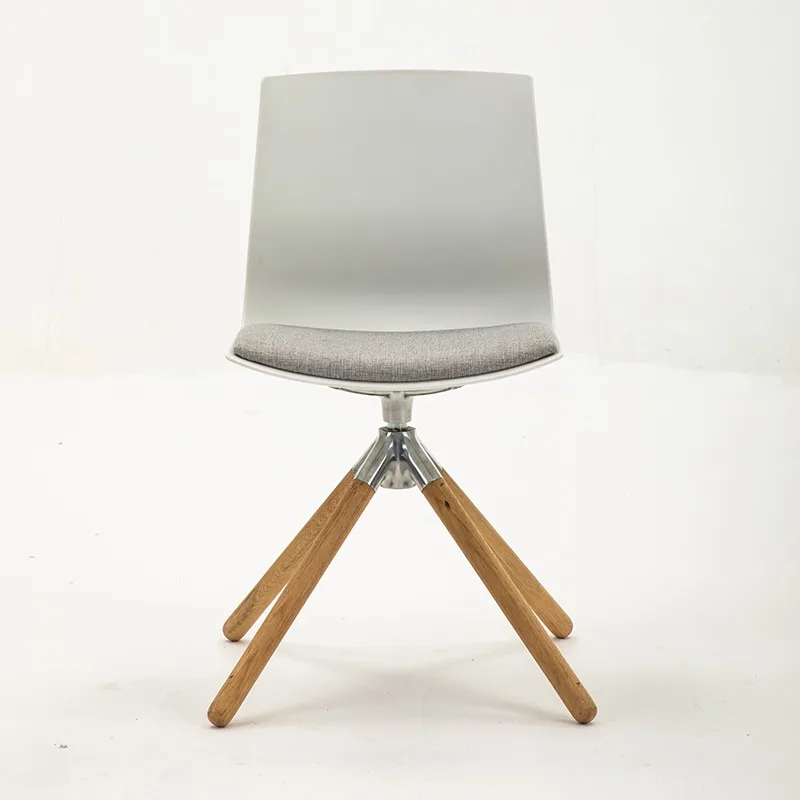
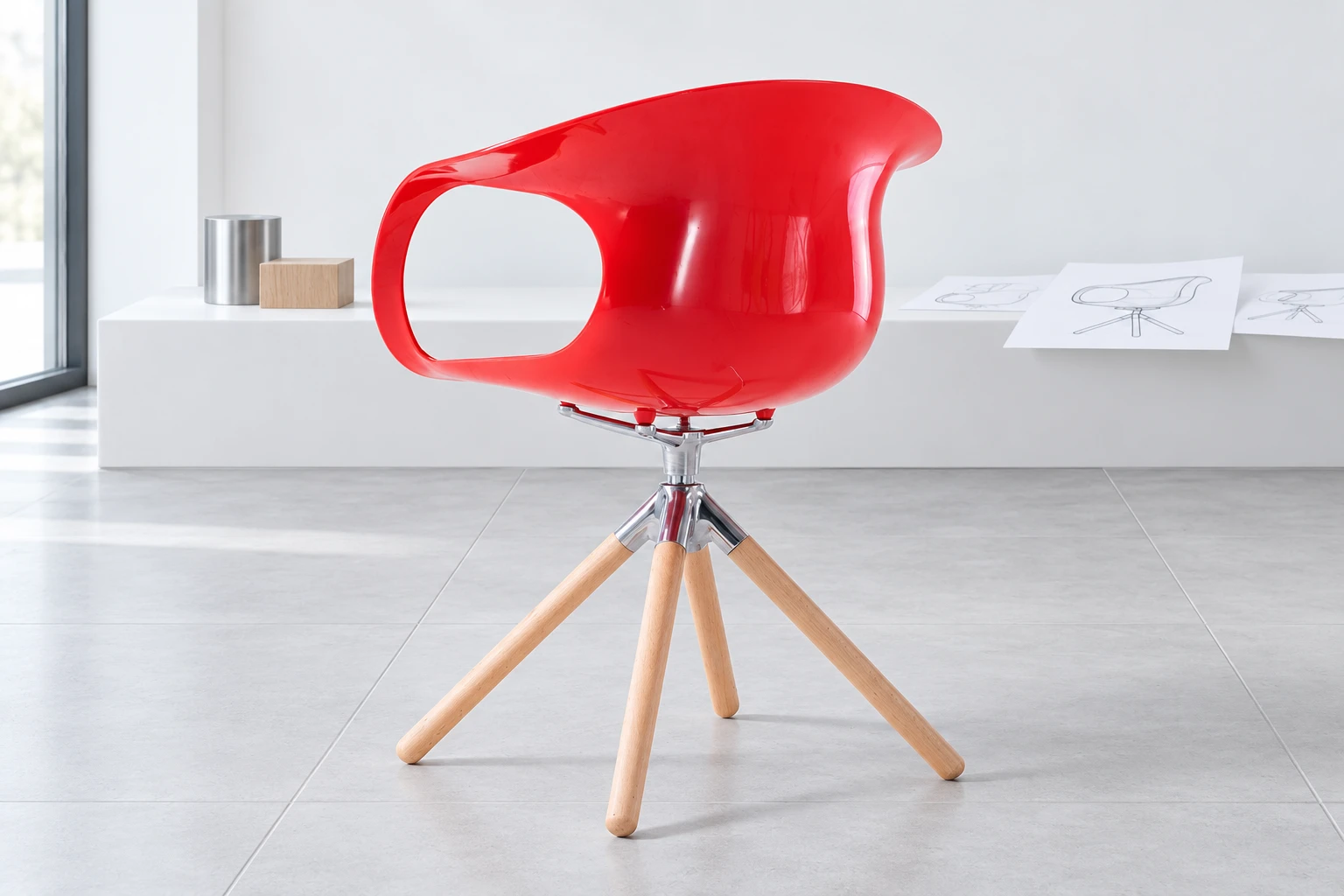
Our AH-8100-103 pairs a one-piece ABS shell with cut-out armrests, a metal connection beneath the seat and four wooden legs. The red shell contrasts clearly with the natural wood appearance. When assessing this type of chair, check whether the arms clear the underside of the table and confirm the protective glides fitted to the wooden feet.
If the dining area is frequently wet-mopped, ask how the leg ends are sealed, what moisture protection is specified and how the legs should be wiped down. Similar wood colours do not establish the same timber species or resistance to exposure. Refer to the finish specification for the batch you intend to purchase.
4. Castor bases: define where movement belongs
Castors can make training rooms, meeting areas and flexible workspaces easier to rearrange. In a conventional dining area, consider carefully whether that freedom of movement suits the way guests use the chair:
- Support when sitting and standing: Dining chairs are generally expected to stay in place during these movements. A freely rolling castor on a hard floor may allow the chair to move unexpectedly.
- Floor compatibility: Hard nylon wheels and softer polyurethane (PU) treads can behave differently on tiles, carpet and timber, both in rolling resistance and noise.
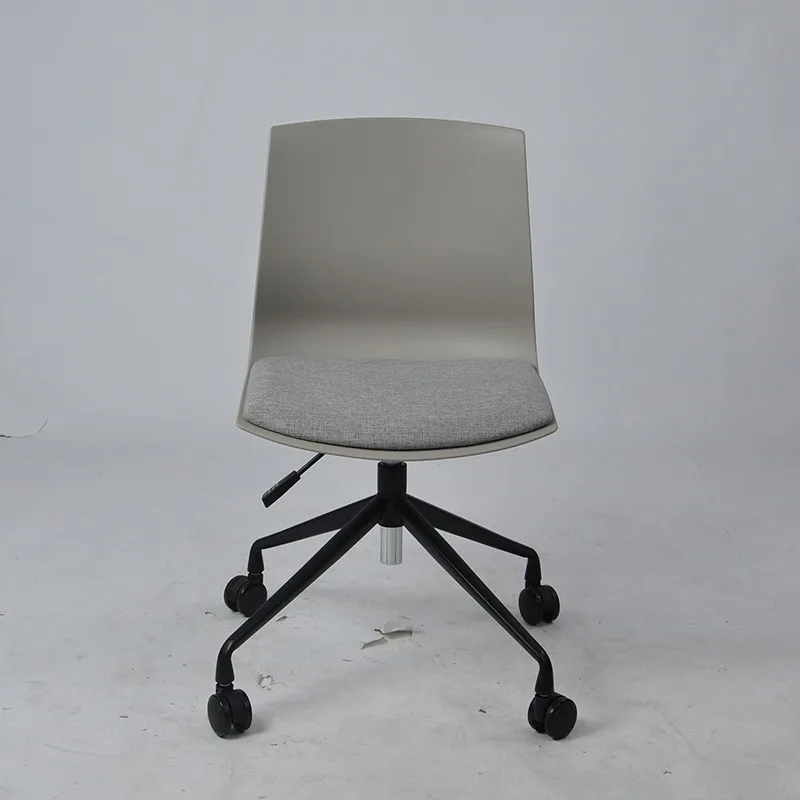
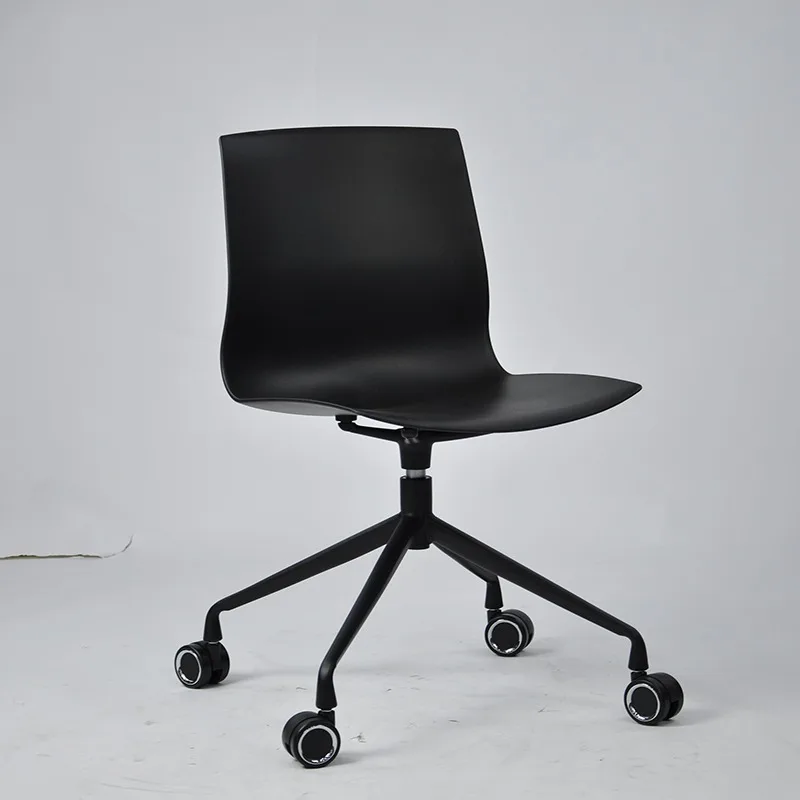
Our AH-7031-36K brings together a PP shell, an upholstered seat pad and an aluminium-alloy castor base for a mobile meeting chair configuration. It is a separate finished specification, rather than a fixed-leg chair with wheels simply substituted. Test a sample along the actual flooring route, checking how it rolls, crosses thresholds and allows access for removing hair or fibres caught around the wheels. If the project needs load-dependent braking or directional locking, specify those requirements separately and confirm them for the exact configuration.
5. Compare the complete configuration
The base works with the shell, connecting hardware and floor-contact parts as one assembly. Use the four areas below to compare complete chairs.
| Assessment area | Metal legs | Wood legs | Castor base |
|---|---|---|---|
| Space and fit | Leg spread, footprint under the table and surface finish | Wood tones, connecting hardware and moisture protection | Movement routes, rolling resistance and control of unwanted movement |
| Sample assessment | Pull out and tuck in beside an occupied seat; check for clashes with the table pedestal | Compare with timber or stone tables under the room’s lighting; inspect the feet | Sit down, stand up and move the chair across actual floor transitions |
| Maintenance | Glide replacement, corrosion protection and compatibility with routine cleaning | Protection during mopping and instructions for repairing the finish | Access for clearing hair and fibres; replacement-part lead times |
| Common assumption to avoid | A slim frame must be lightweight or stackable | Similar colours mean the same material or no maintenance | Any castor is quiet on every floor or includes a brake |
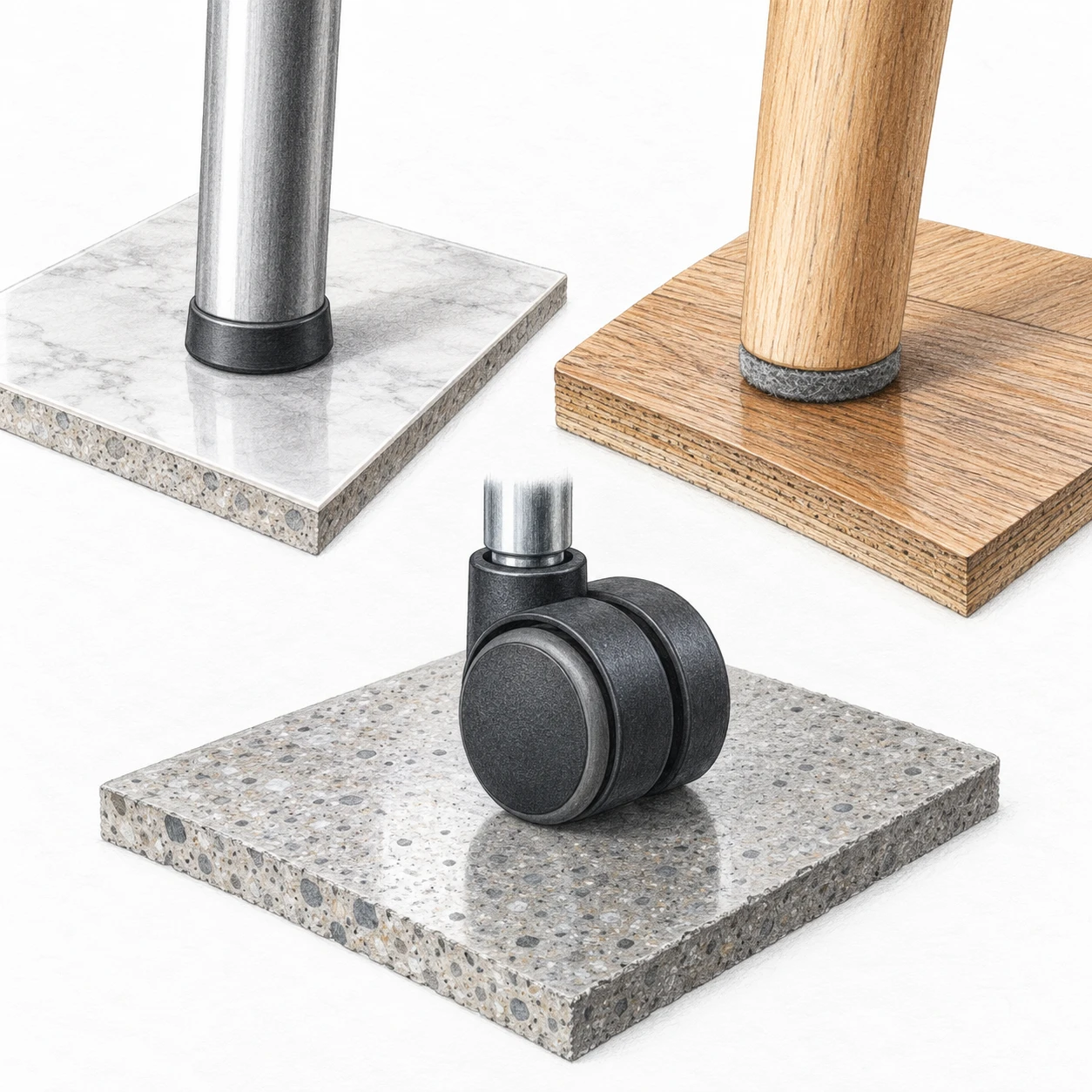
6. Run six sample checks before placing a bulk order
Once a sample arrives, bring the facilities, operations and purchasing teams together for these six checks:
- Verify the complete specification: Match the model code, shell material, base and connecting hardware, surface finish and glides against the procurement schedule.
- Measure the critical clearances: Record seat height and the chair’s maximum overall width. For an armchair, measure from the floor to the top of the armrest, including its front edge, and check that the chair can tuck fully under the table.
- Recreate use and cleaning: Ask cleaning staff and people of different builds to move the chair, sit down and clean beneath the table. Record scraping sounds, awkward movements and any difficulty reaching the floor.
- Plan for wear and replacement: Confirm expected wear intervals for glides, tube plugs or castors, replacement-part lead times and how easily staff can change them on site.
- Request the relevant reports: Where the project requires load, durability or fire-performance testing, request reports for the exact model and configuration. A report for an individual raw material does not replace testing of the finished chair.
- Confirm packing and delivery: Agree whether chairs arrive assembled or in parts, the quantity per carton, shipping volume and any limits on stacking during storage.
Choosing chair bases for your next project?
For a restaurant, hotel or shared office project, send us your table specifications, floor materials and seating movement requirements. Contact the PATTRIX team to discuss material samples, dimensional checks and sample chair assessments for the complete configurations you are considering.