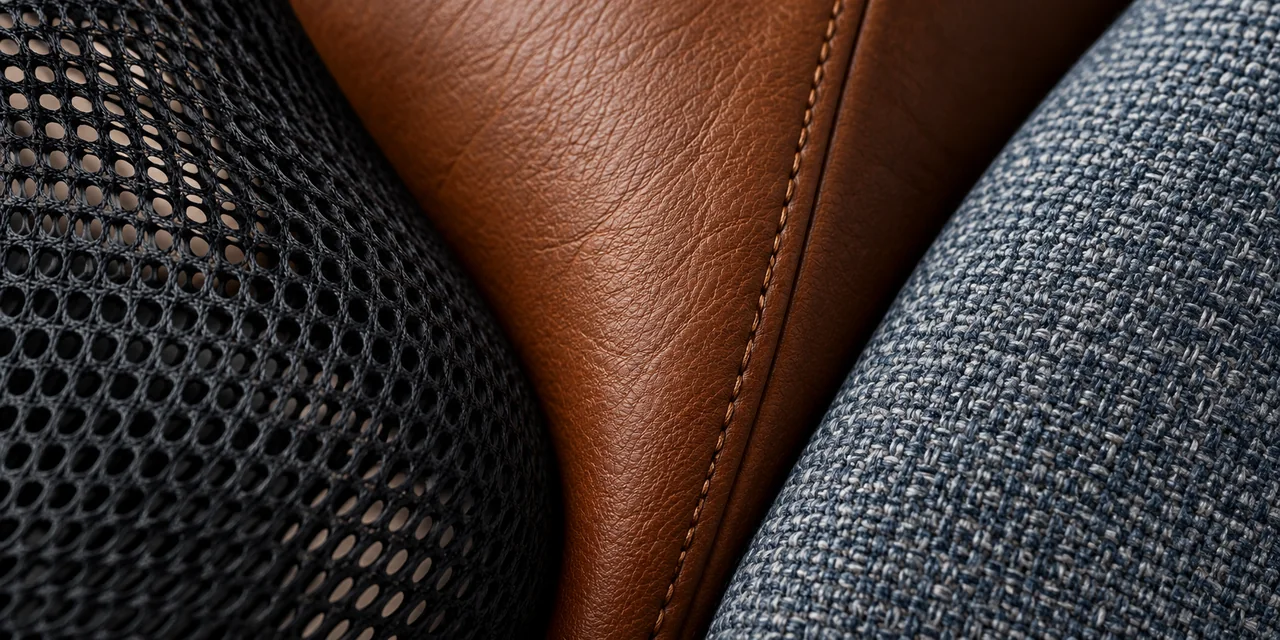
Material selection for seating is often reduced to “which is better,” but the reality is that different materials suit different use cases. Here is a practical analysis based on real project feedback.
Mesh Seating: Balancing Breathability and Support
Ideal Use Cases: High temperature/humidity environments, extended continuous use (over 6 hours/day)
Core Advantages:
– Excellent breathability; prevents back perspiration in summer
– Lightweight (typically 2-3kg less than leather), easy to move
– Moderately priced, suitable for bulk deployment
Considerations:
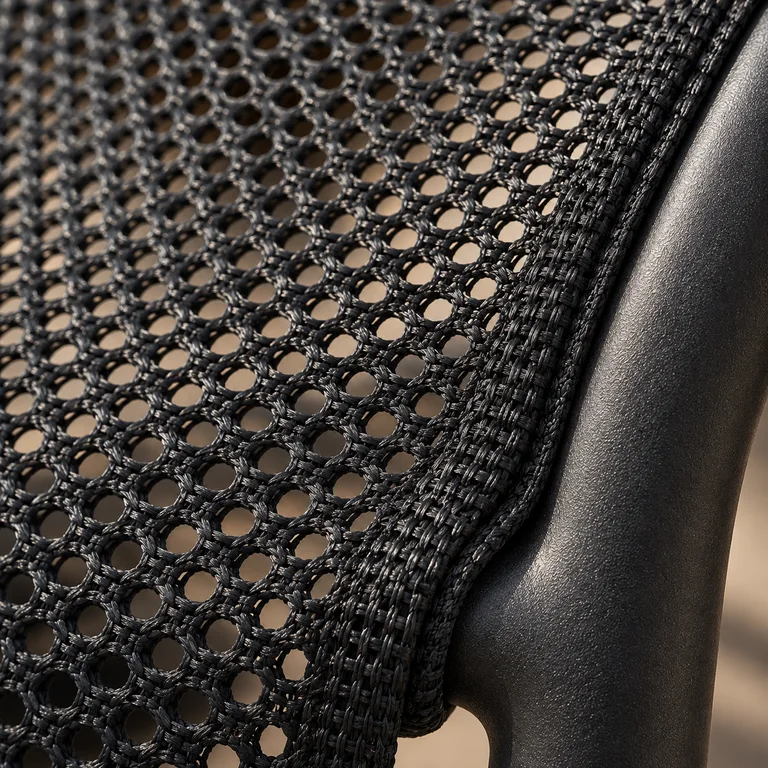
Mesh tension degrades over time. Our tracking tests show standard mesh chairs develop an average 1.5cm sag after 2 years. Premium mesh (such as Matrex or 3D woven) extends this to 3-4 years.
Additionally, mesh snags easily and is unsuitable for pet-friendly offices or frequent relocation scenarios.
Leather/Synthetic: Durability and Maintenance Costs
Ideal Use Cases: Executive conference rooms, management offices, environments requiring frequent cleaning (medical, restaurant back-of-house)
Core Advantages:
– Easy to clean; liquid spills wipe away directly
– Strong visual presence, elevates space quality
– Good abrasion resistance, suitable for high-frequency use
True Cost:
Genuine leather chairs require 2-3x the initial investment of fabric chairs, but 5-year total cost of ownership is comparable or lower. Chain restaurant data shows genuine leather dining chairs have a 12% scrap rate after 8 years, while fabric chairs reach 35% scrap rate after 5 years.
Synthetic leather (PU/PVC) offers value, but beware: low-grade PVC cracks and peels after 2-3 years. Choose REACH-certified eco-friendly synthetics.
Fabric Seating: Value and Comfort
Ideal Use Cases: Training rooms, temporary workstations, budget-constrained projects
Core Advantages:
– Lowest initial cost
– Soft touch, not cold in winter
– Rich color options, easily matches space design
Maintenance Challenges:
Fabric biggest issue is stain penetration. Coffee and tea stains that soak into fibers cannot be thoroughly cleaned with standard methods. We recommend fabric chairs with stain-resistant coatings (such as Scotchgard), which improve stain resistance by 60%.
Also, fabric chairs are unsuitable for humid environments due to higher mold risk.
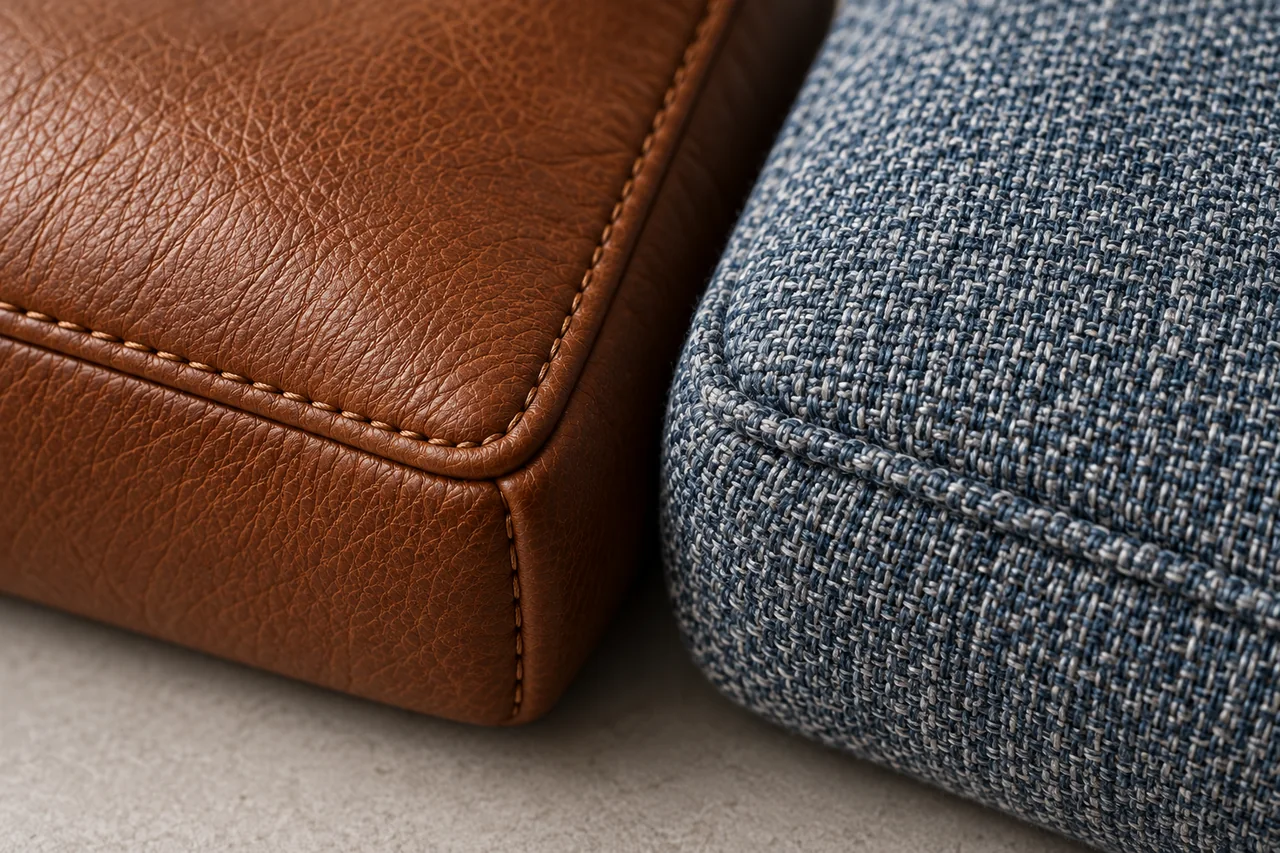
Selection Decision Tree
Ample Budget + Long-term Use → Genuine Leather
High-frequency Use + Breathability Required → Premium Mesh
Temporary Project + Cost-sensitive → Fabric
Frequent Cleaning Required → Synthetic Leather
Finally, regardless of material, chair structure (frame, gas lift, casters) determines actual lifespan. Material is surface; framework is foundation.